Tuesday, June 21, 2011

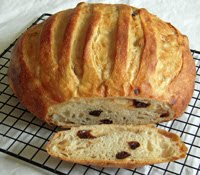
Semolina Bread


This is one of four semolina breads in the book, the levain or sourdough version. It is somewhat unfortunate that we aren't making the others at the same time so we could compare them. However, some might have found that a bit overwhelming.

In general, I'm quite fond of semolina breads and this one didn't disappoint. I made the recipe twice. While the recipe specifies durham flour, the first time I used Bob's Red Mill Semolina Flour. The second time I used King Arthur's Durham Flour. According to Kastel's Artisan Breads the only real difference between the two flours is the grind; semolina has a coarser grind. While I could see a difference in the two flours, it wasn't that much of a difference. The second loaf is shown. I use the shaping technique described in The Bread Baker's Apprentice

Overall, this is a terrific loaf. I can't justify a preference between the two loaves, but slightly preferred the latter. A great loaf.

Pain Rustique


There really isn't a lot to say about this bread. It is very straightforward to make. Apart from a simple poolish that must be made the day before, it is relatively quick to make. It has a somewhat high hydration and is very similar to a ciabatta in many ways. The results are a light, airy rustic bread that is simply spectacular. It is an instant favorite!

Monday, May 23, 2011

Pissaladière


Rounding out the recipes for may is a pissaladieère, a French pizza. This is something I made before and am quite fond of. The crust is quite thin, so it has both an initial crispiness, but is also chewy around the edges or cornicione.

Hamelman's recipe works quite well. He doesn't give cooking times, perhaps because he recommends setting ovens as high as they will go and that introduces too much variability. I cooked mine at 550 degrees for about 8 minutes. But I didn't stretch my dough out as much as he recommended. Rather than 12 x 16 my pies were closer to 10 x 15.

Anchovies I can take or leave, but I generally prefer to leave them.
So for this recipe, I diced my anchovies rather than leaving them whole (and left them off part of the pie altogether). Dicing is in the spirit of things but keeps you from getting too much of an anchovy at once.

Finally, I found that the recipe really only made enough caramelized onions for one pie, not two. I would definitely make more next time.

Traditionally, this is made with caramelized onions, olives, and anchovies, just as Hamelman's recipe calls for. However, like pizza, it can be made with other toppings. For my second pie, I used a recipe for a tomato topping from Anissa Helou's Savory Baking from the Mediterranean. Another good choice would be caramelized onions, blue cheese and walnuts.

Bottom line, this is a great crust recipe and well worth going back to.

Roasted Hazelnut and Prune Bread


As I recently said, I'm not a fan of hazelnuts in bread. Pecans, walnuts, sunflower seeds, yes. Hazelnuts not. And to this list of likes and dislikes, I need to add prunes to the dislike column. Sot this puts the loaf at a considerable disadvantage.

Still the bread itself was quite, quite good, as long as you avoided the nuts and fruit. This would certainly be a loaf worth revisiting if made with pecans and dried cherries.

A loaf with an unrealized potential.

Five-Grain Bread with Pâte Fermentée


For the challenge, this is the second loaf of a five-grain breads. There are four different loaves to found in Hamelman. The previous loaf was a straight-dough. To compare the loaves, I remade the original as I made the new loaf. The new loaf is the one on the left. The original is the one on the right. (Yes, I'm starting to play with decorations. It is unclear whether this will be a formal part of the challenge, but I don't want to let it slip by.)

As a lighter (less whole grains) bread, I preferred the new loaf to the original. But both were quite pleasant loaves and breads that I'd be willing to make again.
Still, the new loaf will be my first choice.

Hazelnut and Fig Bread with Fennel Seeds and Rosemary


This is one of a couple fruit and nut breads found in Hamelman. It is a pleasant enough bread but I'm not really taken with hazelnut in bread. I love hazelnuts in other things including ice cream, jut not bread. For the fruit, you could probably substitute any number of things. I was actually out of figs, so I used dates. I realize this is a bit of a stretch, but dates seemed to work fine.

There really isn't much to say about it other than it was an okay bread.

Thursday, May 19, 2011

Flaxseed Bread


In the interest of full disclosure, this bread had two strikes against it before I even began. First, it is a rye bread. If you have been reading my previous postings, you will know that I don't generally care for rye breads. Worst yet, it has flax seed. I realize that flax is wonderfully healthy, but it always seems to have a grassy taste that I don't care for. It is true that baking considerably lessens this problems, but it rarely eliminates it. Still, it was one of the recipes in the book, so I made it, ... but not with a great deal of enthusiasm.

Wwhen all is said and done, it really isn't a bad loaf. Not great, but not bad. But not something I'll be in a hurry to make again. Recipe completed. Time to move on.